
“Everyone’s unique. Black, white, high school grads, adult learners… we all bring something different to the table. And that’s valuable.”
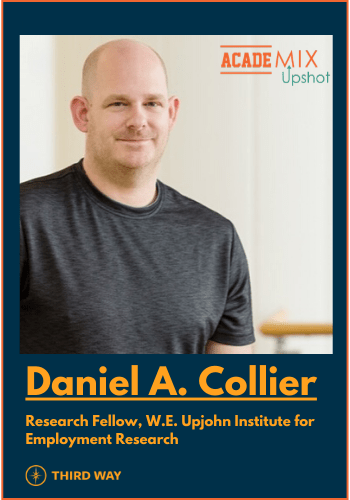
Dr. Dan Collier
This from Dan Collier, PhD, self-described as holding a white-collared degree and being blue-collared at heart. Specializing in Higher Education policy, organization, and leadership, it more than made sense to discuss with him the first-gen population and their impact on higher ed.

As a first-gen and returning adult who’d earned their doctorate, much of our discussion examined the element of diversity in higher ed and what all it encompassed, leading to the quote above. On advice for first-gen students navigating college, he had this to say:
- Find a mentor at your institution.
Dr. Collier points toward having a reliable adviser as a major determining factor in one’s speed of transition to campus life, even going as far as to recommend finding one mentor on staff and another from the faculty. The two perspectives will serve first gen students well, give a wider variety of advice, opinion, and fact, as well as begin to branch out one’s network of contacts.
“Networking is a super large part of the college experience, and having someone in your corner to ‘vouch’ for you, whether it be for a job application or internship opportunity. And you never know till you ask someone.”
Dan Collier, PhD
*To add, you shouldn’t wait till close to the deadline to reach out to these people either! I made that mistake once or twice, and you wouldn’t want to rush someone you want writing about how ‘responsible’ you are at the last minute!
- Admit you don’t know everything.
The biggest hurdle to jump over for first-gen students is going from a place of relatively little knowledge to having a handle on who they are and how they fit into the academic world. As repeated many times, we don’t know what we don’t know, so there’s no shame in clarifying anything you need re-explained. I personally had problems opening up, and have worked through undergrad to be more willing to raise my hand and put myself out there. Often times, you’re not the only one wondering, and you can seriously help several students and yourself better understand materials and concepts. Combine this with Pro Tip No # 1 up there (Find a mentor), and you’ll quickly close in on the gap most of us face out there!
- Be your best self. Seriously.
Dr. Collier and I brought up the topic of higher ed institutions branching out their marketing toward a first-gen audience, and how recent a trend this is. As is his personal opinion, college life wasn’t always catered to just any and everybody, and was originally a more white-collar, upper-class environment that many working-class families never got to experience; the publics were for the land owners and the affluent.As such, evolving from more traditional tactics to ones that better accommodate and entice first-gen and other individuals from diverse backgrounds is a challenge for some universities.
But diversity, as the title states, is not skin deep. A college campus is this ever-changing, always-evolving landscape that is better for you having been there, and why you’re chosen in the first place! You bring to the university a set of skills and attributes, along with a thirst for knowledge, that improves the overall college experience. I chose to emphasize my working-class culture, which resonated with some adult learners in my undergrad, and fostered a sense of belonging and community with a few more classmates.
Dr. Collier, who claims to speak “unacademically” more often than not, teaches his classes in the same vernacular he is familiar with: that of the ‘common man’. One time, though, he tells a story of when he attempted to switch out his usual antics for some “PhD jargon”… and how much he disliked it. It wasn’t him or how he taught or why he was in that position. The phrase he used to describe the scenario was:
“Can’t LS swap a Subaru without a lot of work.”
That’s not to say people can’t change, but that what comes natural to us can be how we present ourselves in the academic world, and that if both parties give a little, they can gain a whole lot.

 firstgenclass.school.blog